
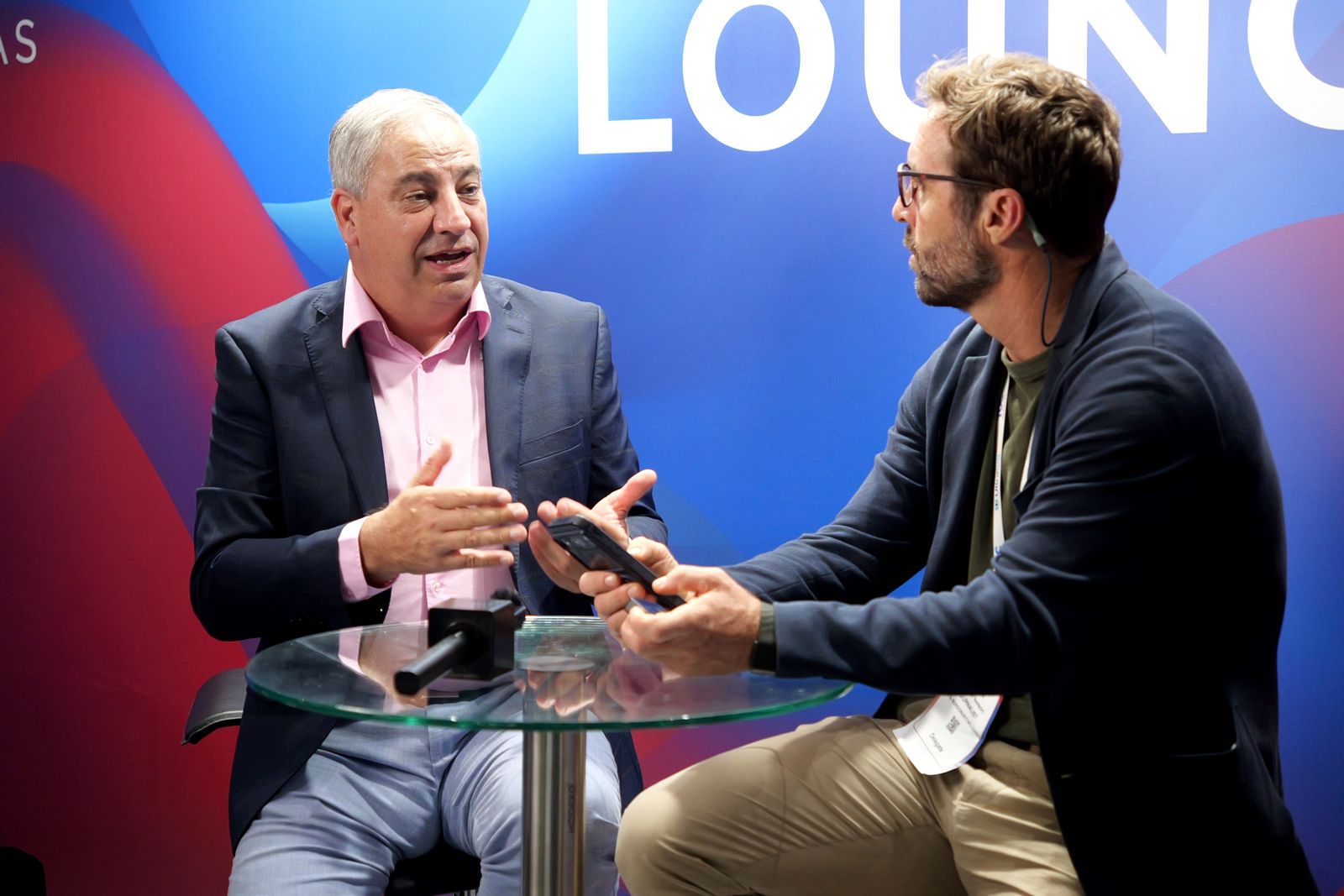
Denson White, who leads APM Terminals’ push toward intermodal transportation through Mobile, Alabama, said Gulf terminals are positioned to capture growing Asia-to-Latin America trade and US energy exports.
Trade flows are shifting from Asia to Latin America as nearshoring takes place leaving US Gulf ports well placed to capture the move, says White, chief commercial officer for APM Terminals in Mobile, Alabama, told TOC Americas.
“How do we move things out of Asia markets and move them into Latin markets? And that’s already in progress,” White said.
Energy exports are a particular growth area for Gulf terminals, he said. “One of the biggest things, energy, energy and LNG, CNG, moving that out of America into these markets is a huge opportunity that’s going to continue to grow over the next couple of years. Hence, a place that’s positioned in the Gulf makes a lot of sense because it’s a short rail move and it’s also a short ocean move,” White said.
Mobile’s Gulf location also gives it a transit-time advantage on routes that do not have to go around Florida or call at multiple East Coast ports, White said. He pointed to weight limits as another factor pulling cargo towards Gulf-connected rail over trucking. “Whenever you can go from 45,000 pounds to 67,000 pounds, that’s a big difference. I mean, you’re adding almost 50% more cargo into a container that you can ship versus over the road,” White said.
Shifting ocean carriers onto smaller Gulf ports has not been straightforward, White said, because lines are used to filling large vessels on established routes into Miami and Los Angeles. “The ocean lines are also very set in trying to fill up big ships. And sometimes ports like Mobile, Alabama might have a little bit smaller ships that they are focused— their mentality and what they’re doing is a little bit different,” he said.
White argued that containerisation’s logic, moving goods once into a box and not touching them again until destination, means distribution should shift further inland. “Why are we taking the box to these cities that are the hinterland markets and then distribute from there? This is the big change that is already beginning to happen… you’ll continue to see that over the next 20 years,” he said.
That shift is already changing where agricultural and forestry goods are loaded into containers, White said. “The entire infrastructure was built to bring it to the bulk container. So guess where all the agriculture loading was? At the port… now those are beginning to happen because you’re putting in the container at the farm,” he said.