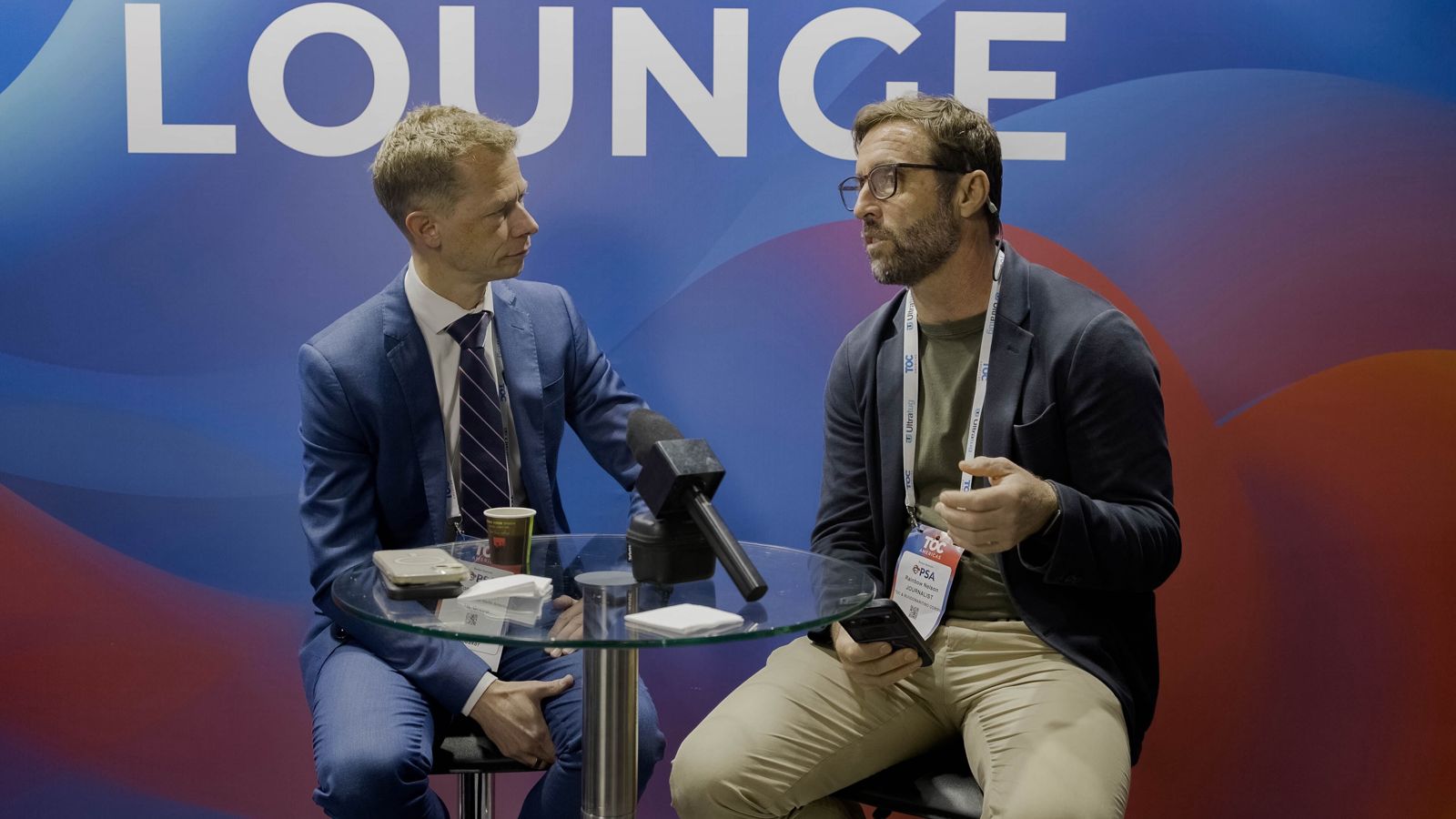
Tom van Eynde of TiL Group told TOC Americas the terminal operator is investing in port capacity “more aggressively than we’ve ever done before”, even as political risk around port concessions increases.
Asked how TiL prices that risk into new investments, van Eynde said its growing exposure to MSC is the main safeguard. “MSC being the biggest carrier and still growing faster than the rest of the market, that is the element that for us is a big de-risking element in our investments,” he said.
Political risk, left undetailed
Pressed on how situations such as Panama, cited in the conversation as an example of governments taking new positions on ports, might be changing valuations, van Eynde did not go into detail. He pointed only to “somewhat of a US angle on it, although that’s maybe politically too sensitive for me to go into detail.”
Keeping pace with MSC
Van Eynde said TiL’s single biggest challenge over the coming years is simply keeping up with MSC’s fleet growth. The carrier’s order book is expanding faster than TiL can build new capacity, he said: “it’s practically impossible to really develop that kind of extra capacity.” Where TiL cannot develop capacity quickly enough itself, he said the group would look to acquire existing capacity instead, even though that has not traditionally been its strategy.
Tariffs relocate cargo, they don’t remove it
On the tariff disruption of the past two years, van Eynde said TiL’s global footprint has let it absorb shifts in trade flow: when volumes moving through Canadian ports fell, he said the group saw them picked up automatically at its US terminals. Once tariffs settle into a more normalised range of 10–15%, he said, the impact on volume becomes minimal. The bigger cost, he said, comes from cargo owners front-loading shipments ahead of tariff deadlines, concentrating volume into peaks that push up operating costs for terminal operators in a way they do not for carriers, who can simply add vessels.
Building ahead of regulation
On sustainability, van Eynde said pressure in the US had eased and there was “less reluctance on using fossil fuels”, but long-term targets remain in place regardless of politics: Los Angeles and Long Beach, he said, still have a target of 2035 for their whole port operation to move to zero emission. TiL is going further than required at its new terminal under construction in Baltimore, which is being built with cold ironing so vessels can plug in and switch off their engines while berthed. “That’s purely just our own decision as a private investor that that is in the long term the right thing to do,” he said. California, he added, had led the way worldwide in turning cold ironing into a standard, with new tenders in Europe and ports on the US East Coast increasingly requiring it too.
About TiL Group: the company is building a new terminal in Baltimore equipped with cold ironing so that berthed vessels can switch off their engines, van Eynde told TOC Americas.