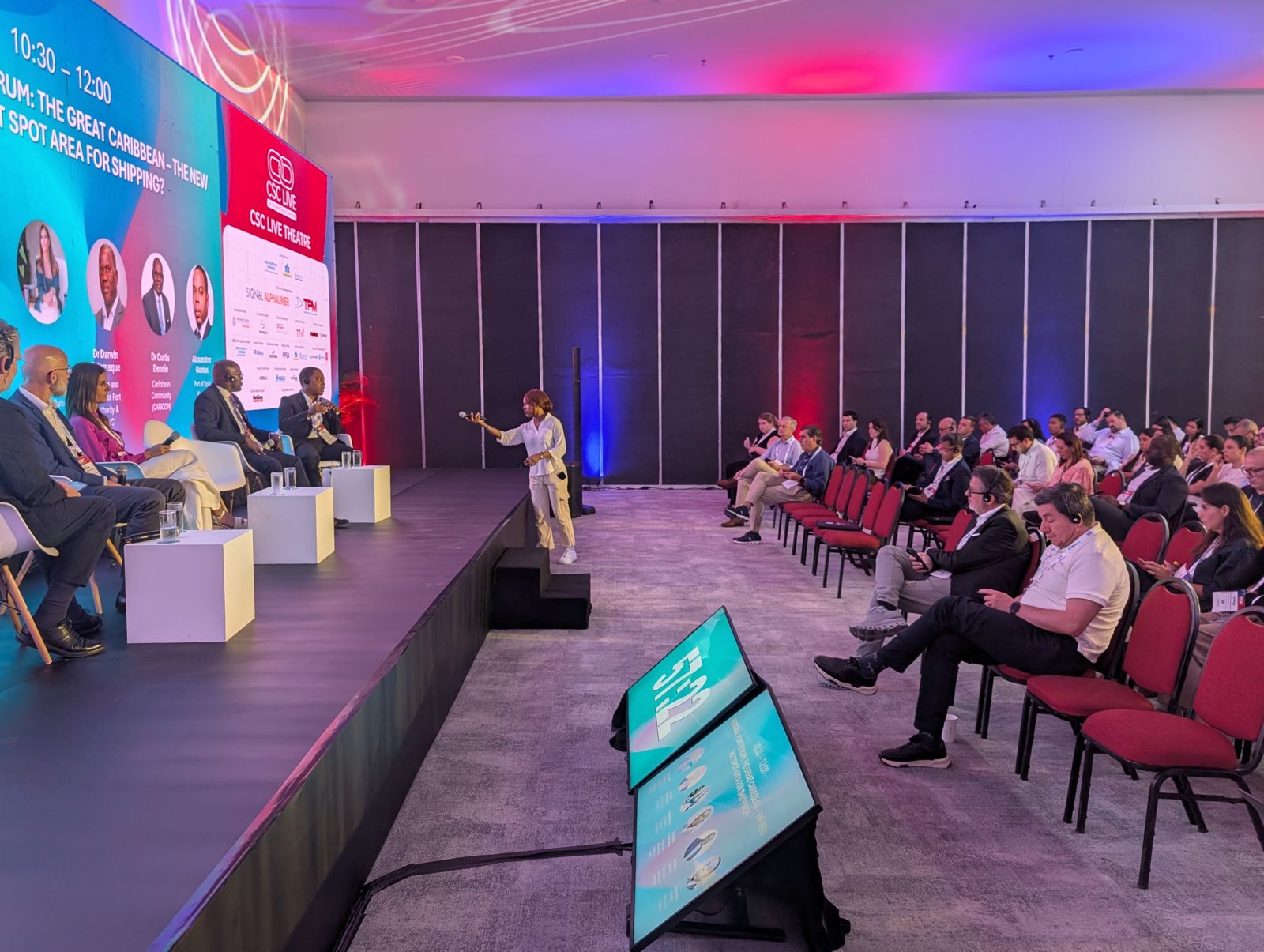
The Great Caribbean regional forum, part of TOC Americas 2026’s regional spotlight track, set out to assess the outlook for the Caribbean’s ports and carriers. Guyana’s oil-driven economy is reshaping cargo flows across the region, Cristobal Schlaubitz chief executive officer of Tristar Port told delegates in Cartagena.
- Guyana’s oil boom is reshaping cargo flows across the Caribbean, said Cristobal Schlaubitz, Tristar Port chief executive officer. The country already produces more than 900,000 barrels of oil a day for a population of about 900,000, and output could reach 1.5 million barrels a day by 2027, he said. Container cargo at the port is expected to rise more than 30% this year, though all cargo currently transships through the Dominican Republic, Trinidad or Barbados because Guyana lacks a deep-draught berth for larger vessels.
- Cartagena’s port system is growing fast but congestion is spreading beyond the terminal gates, said Federica Noli, commercial director at Sociedad Portuaria Puerto Bahía. Colombia’s port authority is forecasting 17% growth in container traffic this year, she said, but bottlenecks increasingly occur at the port’s exit roads, support zones and inland transport links rather than inside the terminal. Cargo is sometimes handled two, three or four times within the terminal because of delayed pickups and saturated storage yards, adding costs that are passed on to customers, Noli said.
- Caribbean freight costs run far above the global average, said Dr Curtis Dennie, Maritime Specialist, Secretariat CARICOM. “Freight cost in the Caribbean stands almost four times the global average,” he said, pointing to rising tariffs, fuel charges and carrier general rate increases as added pressures. About 90% of the region’s imports arrive by sea, Curtis said, and the Caribbean imports almost 78% of its food, mostly from North America, a gap CARICOM’s 2025 food security strategy aims to close.
- Raising capital for new port investment is one of the Caribbean’s biggest obstacles said Cristobal Schlaubitz chief executive at Tristar Port. Regional banks often lack sufficient capital and misjudge port risk, he said: “They understand shopping malls, hotel towers… A port, they don’t understand.” Guyana is self-funding new dredging equipment because the government has not met the port’s dredging needs, he added, tying up capital that could otherwise go towards expansion.
- CARICOM is advancing a regional ferry initiative to strengthen trade and connectivity across the Caribbean, Curtis said. Heads of government mandated the project at a summit in St Lucia in July, aiming to move people, food and goods between islands that currently rely on indirect shipping routes. Curtis said the region needs implementation, not more research: “We don’t need another study in the Caribbean. The solutions are there.”